

Epoxy resin is widely used across industries due to its strength, durability, and chemical resistance. However, improper handling can pose serious health and safety risks. Implementing proper epoxy resin safety guidelines is essential for protecting workers, maintaining compliance, and ensuring smooth industrial operations. This blog explains best practices for safe epoxy resin use in industrial environments.
Why Epoxy Resin Safety Is Important in Industrial Settings

In industrial applications, epoxy resin is often used in large quantities for flooring, coatings, adhesives, electrical insulation, and structural bonding. Without proper epoxy resin safety measures, workers may face risks such as skin irritation, respiratory issues, and long-term health concerns.
Adopting standardized safety procedures helps industries reduce accidents, improve productivity, and maintain regulatory compliance.
Understanding the Risks Associated with Epoxy Resin
Before applying safety measures, it is important to understand potential hazards:
- Skin and eye irritation
- Respiratory discomfort from fumes
- Allergic reactions with prolonged exposure
- Heat generation during curing
- Chemical sensitivity due to improper mixing
Recognizing these risks allows industries to implement effective epoxy resin safety protocols.
Personal Protective Equipment (PPE) for Epoxy Resin Use
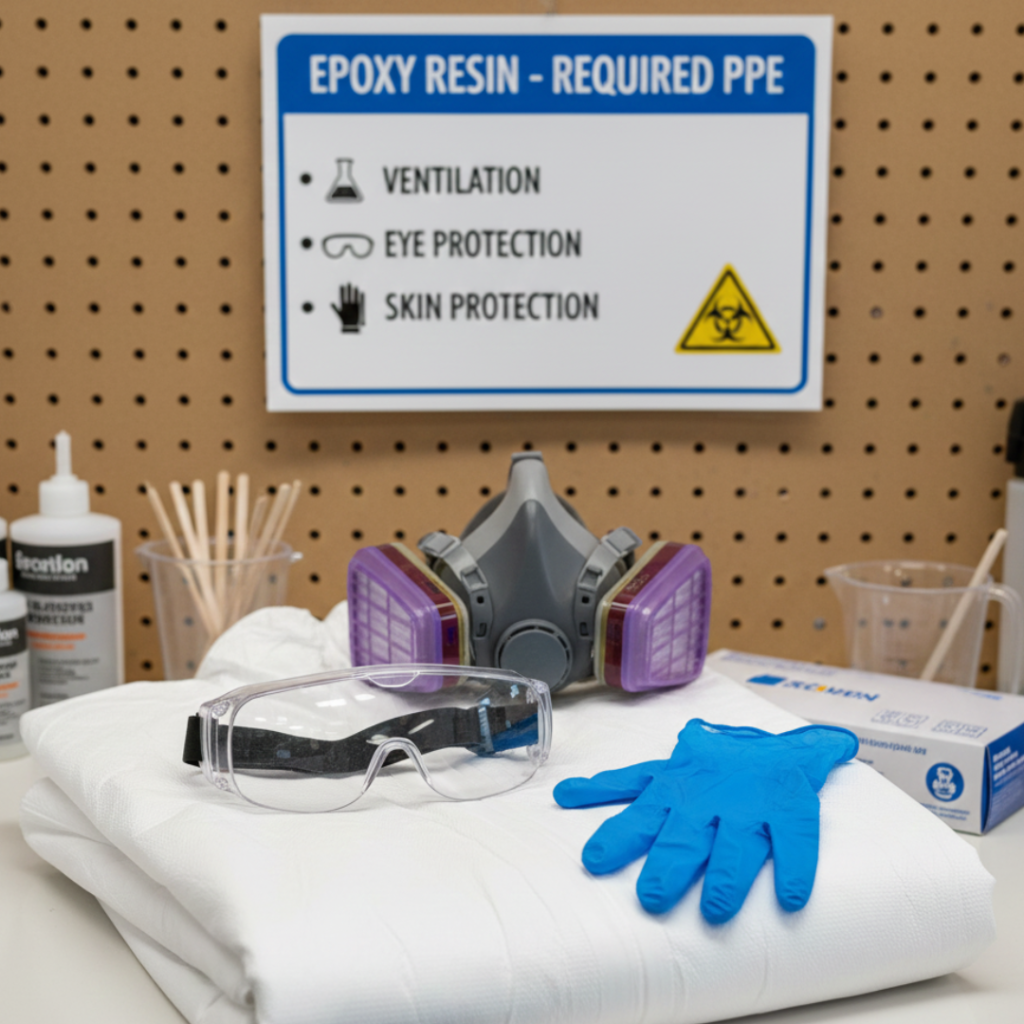
Using proper PPE is the foundation of epoxy resin safety in industrial environments. Workers should always wear:
- Chemical-resistant gloves
- Safety goggles or face shields
- Protective clothing with long sleeves
- Respiratory protection in poorly ventilated areas
Ensuring consistent PPE usage significantly reduces exposure-related risks.
Safe Handling and Mixing Practices

Controlled Mixing Ratios
Incorrect mixing ratios can cause excessive heat, incomplete curing, or material failure. Always follow manufacturer guidelines to maintain epoxy resin safety and performance.
Avoid Direct Contact
Never allow epoxy resin or hardeners to come into direct contact with skin. Even brief exposure can cause irritation or sensitization over time.
Use Designated Mixing Areas
Industrial facilities should allocate specific, well-ventilated areas for epoxy resin preparation to limit exposure.
Importance of Ventilation in Epoxy Resin Safety
Proper ventilation is critical when working with epoxy resin. Industrial facilities should ensure:
- Adequate airflow in application areas
- Exhaust systems where large volumes are used
- Open or semi-open spaces when possible
Good ventilation minimizes inhalation risks and supports overall epoxy resin safety.
Storage Safety Guidelines for Epoxy Resin
Safe storage plays a major role in resin safety. Industrial users should:
- Store epoxy resin in sealed containers
- Keep materials away from heat and direct sunlight
- Label containers clearly
- Restrict access to authorized personnel only
Correct storage helps prevent leaks, contamination, and accidental exposure.
Spill Management and Emergency Procedures
Despite precautions, spills can occur. Industrial facilities should have a clear response plan:
- Isolate the spill area immediately
- Use absorbent materials for cleanup
- Dispose of waste according to safety regulations
- Avoid washing resin into drains
Quick response minimizes hazards and maintains workplace safety.
Worker Training and Safety Awareness
One of the most effective epoxy resin safety measures is proper training. Workers should be educated on:
- Correct handling and application methods
- Emergency response procedures
- PPE usage and maintenance
- Reading safety data sheets (SDS)
Regular training sessions reduce human error and improve safety compliance.
Compliance with Industrial Safety Standards
Industries using epoxy resin must comply with workplace safety regulations and internal safety policies. Following resin safety standards helps businesses avoid penalties, reduce liability, and maintain operational efficiency.
Long-Term Benefits of Proper Epoxy Resin Safety Practices
Implementing epoxy resin safety guidelines offers multiple benefits:
- Healthier work environment
- Reduced accident rates
- Improved productivity
- Longer equipment and surface life
- Enhanced company reputation
Safety-focused operations are more sustainable and cost-effective in the long run.
Conclusion
Epoxy resin is a powerful industrial material, but it must be handled responsibly. Following proper epoxy resin safety guidelines protects workers, ensures consistent results, and supports long-term industrial success. By investing in training, protective equipment, and safe handling practices, industries can fully benefit from epoxy resin while minimizing risks.
FAQ’S
Epoxy resin safety is important because improper handling can cause skin irritation, respiratory problems, allergic reactions, and workplace accidents. Following safety guidelines helps protect workers and ensures smooth industrial operations.
Workers should wear chemical-resistant gloves, safety goggles or face shields, protective clothing, and respiratory protection when ventilation is limited to maintain proper epoxy resin safety.
Epoxy resin should be stored in sealed, labeled containers away from heat, direct sunlight, and unauthorized access. Proper storage helps prevent leaks, contamination, and safety hazards.
In case of a spill, isolate the area, use absorbent materials for cleanup, dispose of waste according to safety regulations, and avoid washing resin into drains to maintain workplace safety.