
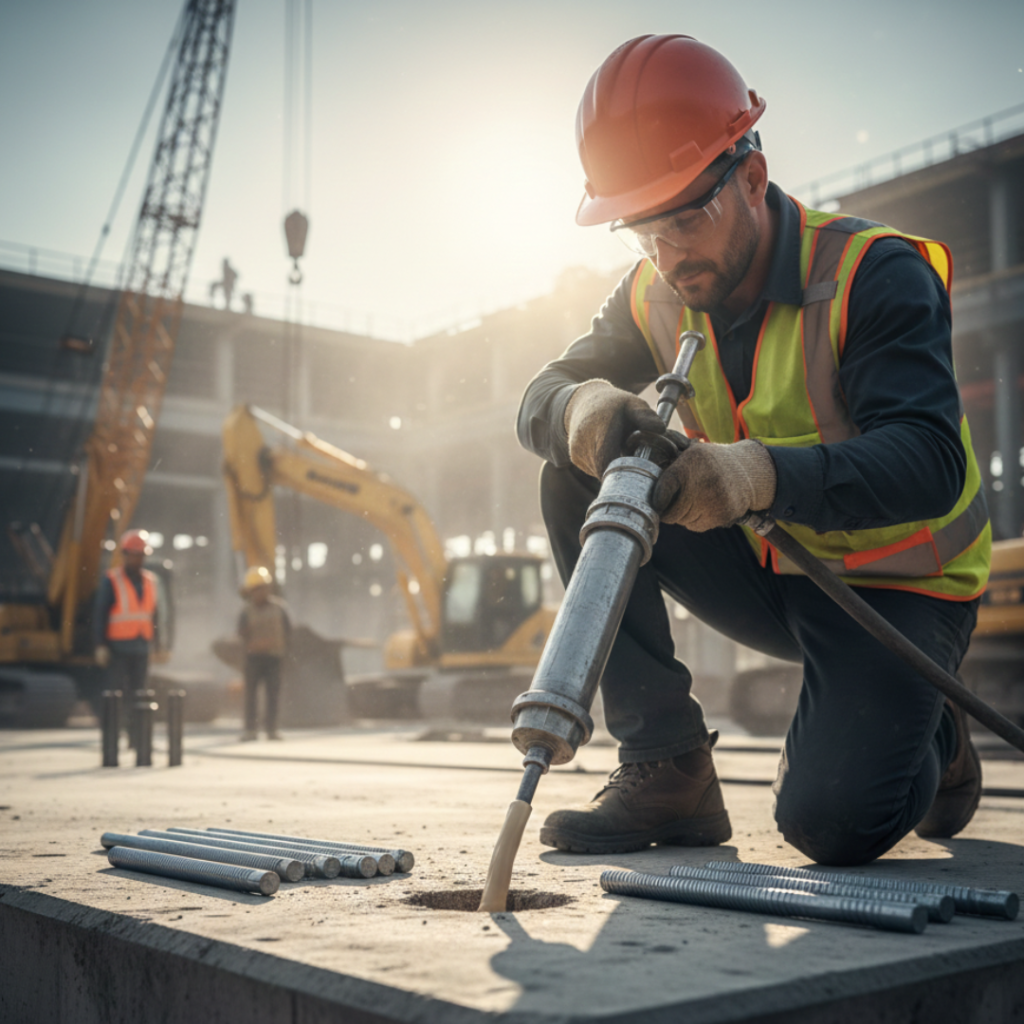
In construction and engineering, securing heavy loads to concrete or masonry requires more than just a simple bolt. For critical applications demanding exceptional strength and reliability, epoxy anchor installation services are the go-to solution. Epoxy anchors provide a robust, long-lasting bond, transforming weak points into solid foundations.
In modern construction and industrial projects, structural strength depends not only on concrete quality but also on how components are anchored. From steel columns and machinery to handrails and façade systems, epoxy anchors play a critical role in load-bearing stability. This is where a professional epoxy anchor installer becomes essential.
This blog explains epoxy anchor installation in detail—how it works, where it’s used, why professional installation matters, and how epoxy anchoring outperforms traditional mechanical fastening methods.
What Is an Epoxy Anchor?
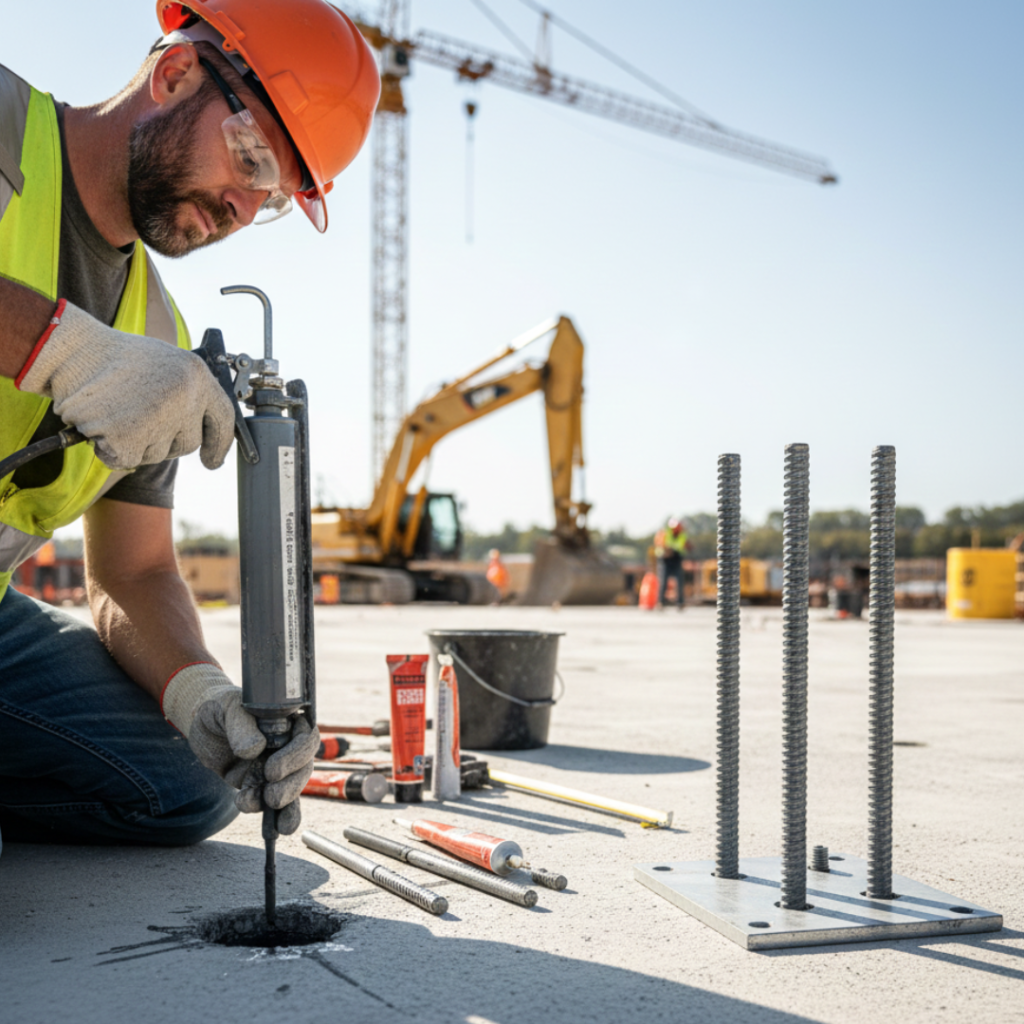
An epoxy anchor is a high-strength chemical anchoring system used to fix threaded rods, rebar, or bolts into concrete, masonry, or stone. It consists of a two-component epoxy resin that bonds the anchor to the base material, creating a powerful, long-lasting connection.
Unlike expansion anchors, epoxy anchors do not create stress within the concrete, making them ideal for structural and heavy-load applications.
What Makes Epoxy Anchors Superior?
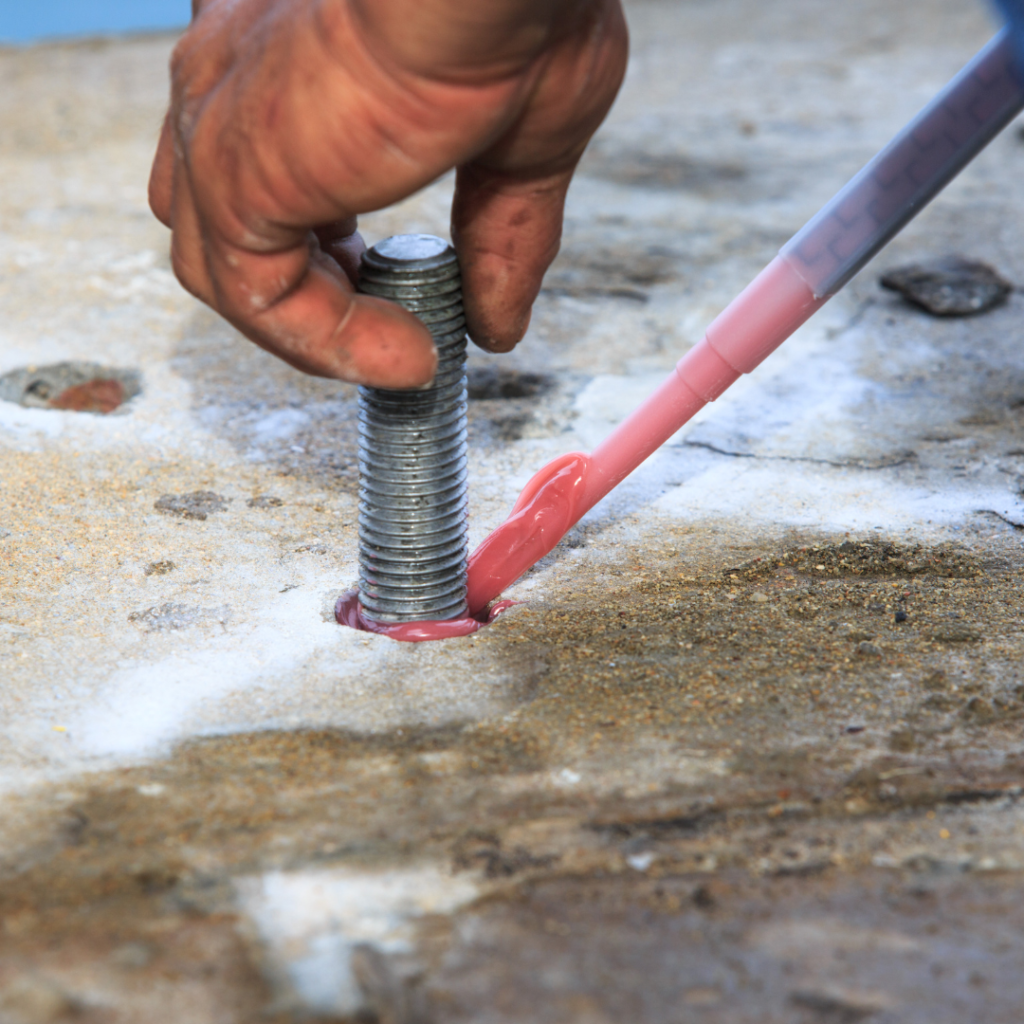
Epoxy anchoring involves injecting a high-strength, two-part resin into a drilled hole, which then encapsulates a threaded rod, rebar, or dowel. This chemical bond is incredibly strong, offering superior load-bearing capabilities compared to mechanical anchors, especially in situations involving dynamic loads, seismic activity, or when working with less-than-perfect base materials.
The benefits of utilizing an expert epoxy anchor installer include:
- High Load Capacity: Capable of supporting immense weights.
- Vibration Resistance: The chemical bond is less prone to loosening under vibration.
- Water and Chemical Resistance: Protects against corrosion and degradation.
- Versatility: Effective in various base materials, including cracked concrete.
The Precision of an Epoxy Anchor Applicator
The success of an epoxy anchor lies not just in the quality of the epoxy itself, but in the meticulous application process. This is where a skilled epoxy anchor applicator proves invaluable. Improper mixing, insufficient hole cleaning, or incorrect setting times can drastically reduce the anchor’s strength and compromise safety.
A professional epoxy anchor applicator follows a stringent protocol:
- Hole Drilling & Preparation: The correct diameter and depth are crucial. More importantly, the hole must be thoroughly cleaned of all dust and debris using brushes and compressed air. Any residue can prevent the epoxy from bonding effectively.
- Epoxy Mixing & Injection: The two-part epoxy resin is mixed precisely according to manufacturer specifications, often using a specialized dispenser. It is then injected from the bottom of the hole outwards, ensuring no air voids are trapped.
- Rod Insertion & Curing: The anchor rod is slowly inserted into the epoxy-filled hole with a twisting motion to ensure full encapsulation. The epoxy then cures, forming an incredibly strong bond.
When to Call for Epoxy Anchor Installation Services
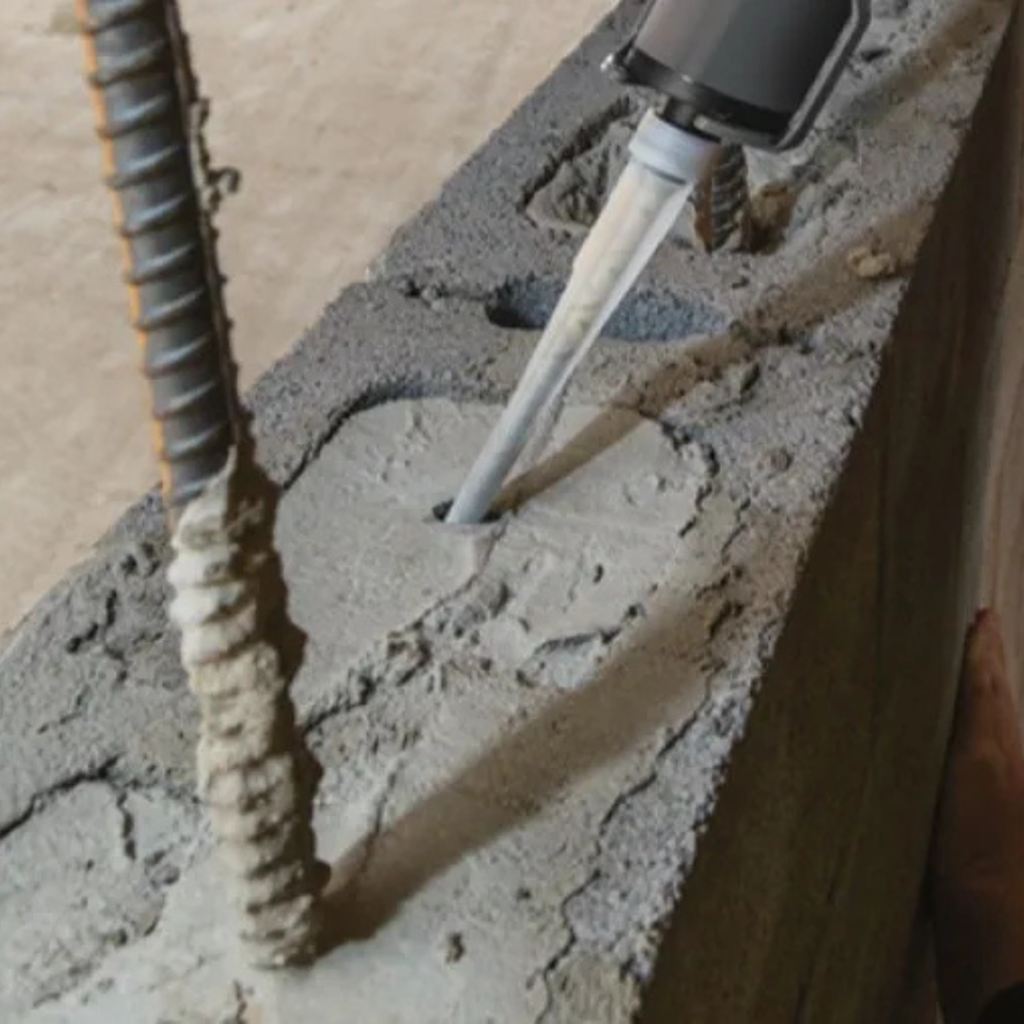
From commercial construction to industrial machinery installation, the need for reliable epoxy anchor installation services is widespread. Common applications include:
- Structural Steel Connections: Anchoring base plates for columns and beams.
- Heavy Machinery Mounts: Securing vibrating equipment that mechanical anchors might fail.
- Safety Barrier Installations: Guardrails, handrails, and fall protection systems.
- Seismic Retrofitting: Strengthening existing structures against earthquake forces.
- Rebar Doweling: Connecting new concrete elements to existing ones.
Choosing a certified epoxy anchor installer ensures that all safety standards are met and the anchors perform to their maximum potential, providing peace of mind and structural integrity for years to come.
Step-by-Step Epoxy Anchor Installation Process
1. Drilling the Hole
Holes are drilled to precise diameter and depth based on load requirements and anchor size.
2. Hole Cleaning
Dust and debris are removed using air blowers and brushes to ensure strong epoxy bonding.
3. Epoxy Injection
The epoxy resin is injected from the bottom of the hole outward to avoid air gaps.
4. Anchor Placement
Threaded rods or rebars are inserted while rotating slightly to ensure even resin distribution.
5. Curing Time
The anchor is left undisturbed until the epoxy fully cures and achieves design strength.
Importance of Hiring a Professional Epoxy Anchor Installer
An experienced epoxy anchor installer ensures that anchors achieve their designed load capacity and long-term performance. Incorrect drilling depth, poor cleaning, or improper resin mixing can significantly reduce anchor strength.
Professional installation ensures:
- Safe curing under site conditions
- Accurate hole diameter and depth
- Proper surface cleaning
- Correct resin injection
- Precise anchor alignment
Role of an Epoxy Anchor Applicator
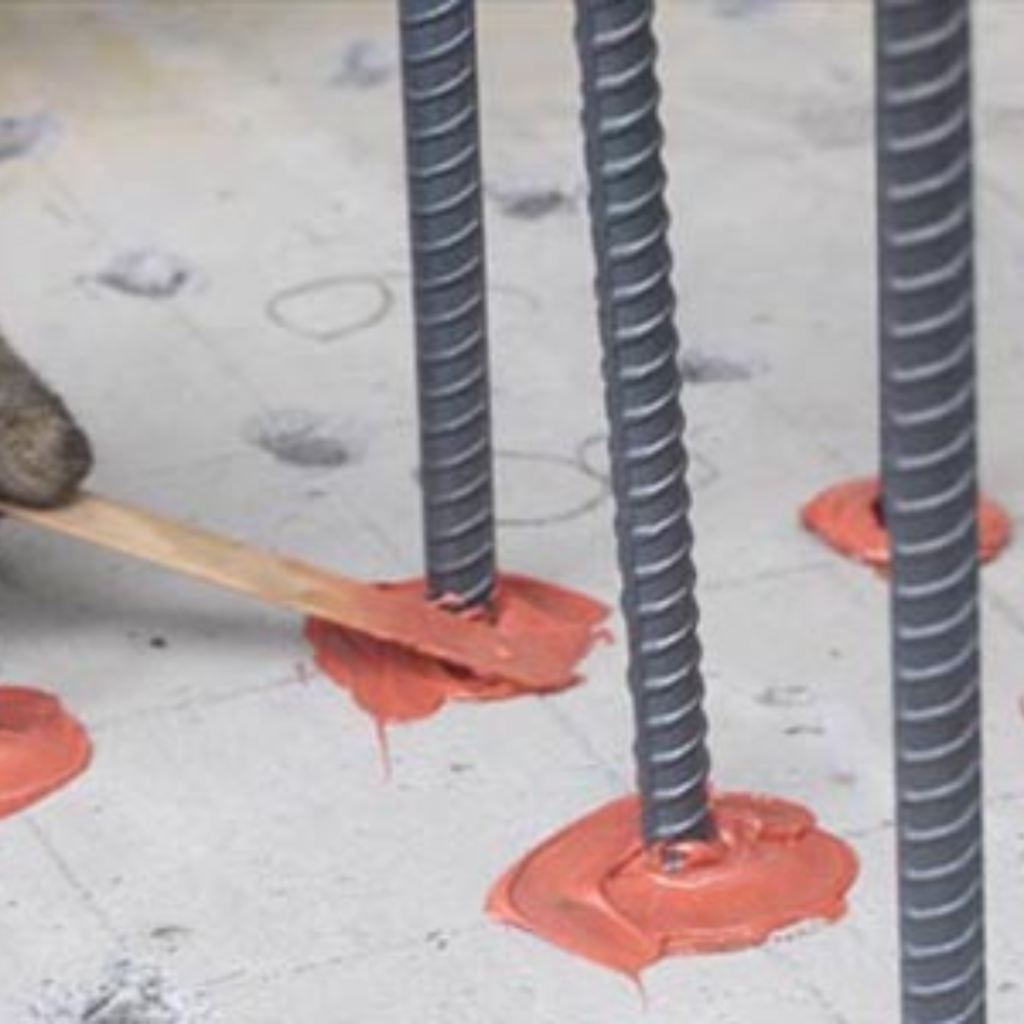
A trained epoxy anchor applicator specializes in handling chemical anchoring materials correctly. Since epoxy resins have specific working and curing times, expertise is critical to avoid premature setting or weak bonding.
Their role includes:
- Selecting the correct epoxy type
- Applying resin uniformly inside drilled holes
- Preventing air pockets and voids
- Ensuring maximum bonding strength
Benefits of Epoxy Anchors Over Mechanical Anchors
- Higher load-bearing capacity
- No expansion pressure on concrete
- Suitable for close-edge and corner installations
- Excellent resistance to vibration
- Strong performance in cracked and uncracked concrete
- Long-term durability
Applications of Epoxy Anchoring Systems
Epoxy anchoring systems are widely used in:
- Industrial plants and factories
- High-rise buildings
- Parking structures
- Power plants
- Oil and gas facilities
- Infrastructure rehabilitation projects
Their versatility makes them a preferred solution for both new construction and retrofit works.
Common Mistakes in Epoxy Anchor Installation
- Insufficient hole cleaning
- Incorrect epoxy mixing
- Overfilling or underfilling holes
- Disturbing anchors before curing
- Using anchors before full strength is achieved
Professional services eliminate these risks entirely.
How to Choose the Right Epoxy Anchor Installation Provider
When selecting a contractor, look for:
- Proven experience in chemical anchoring
- Skilled applicators and installers
- Compliance with engineering specifications
- Use of certified epoxy products
- Clear documentation and load testing capability
Long-Term Performance and Safety
Properly installed epoxy anchors offer exceptional durability and structural reliability. They maintain bonding strength over time, even under heavy loads, vibration, and environmental stress, making them a dependable solution for critical applications.
Conclusion
Hiring a professional epoxy anchor installer is not just about fixing bolts into concrete—it’s about ensuring safety, strength, and long-term performance. With expert epoxy anchor installation services, structures remain secure, compliant, and durable under demanding conditions.
For projects that demand precision and reliability, epoxy anchoring remains one of the strongest fastening solutions available today. Don’t compromise on strength or safety when it comes to anchoring. Professional epoxy anchor installation services provide the expertise and precision required for critical applications, ensuring your structures and installations are secure and robust.
FAQ’S
An epoxy anchor installer specializes in fixing threaded rods, rebars, and bolts into concrete or masonry using high-strength epoxy resin. The installer ensures correct drilling, cleaning, resin application, and curing so the anchor achieves its required load capacity and long-term reliability.
Epoxy anchors are widely used in structural steel connections, machinery installation, handrails, façade systems, bridge works, and industrial projects. They are ideal for applications that require high load-bearing strength without putting expansion pressure on concrete.
Professional installation is critical because improper hole cleaning, incorrect resin injection, or disturbed curing can significantly weaken the anchor. Skilled epoxy anchor installation ensures safety, structural performance, and compliance with engineering specifications.
Curing time depends on the epoxy type and site temperature. Typically, anchors require several hours to fully cure before applying loads. A professional installer ensures the anchor is not loaded until it reaches its designed strength.