

Epoxy resin is widely used in industrial flooring, construction, electrical insulation, coatings, and structural bonding. In all these applications, quality is non-negotiable. Even minor inconsistencies in resin formulation can lead to poor curing, surface failure, or reduced durability. This is why epoxy resin quality standards play a critical role in modern manufacturing.
This blog explains how quality control is implemented in epoxy resin manufacturing, why standards matter, and how manufacturers ensure consistent, reliable performance.
What Are Epoxy Resin Quality Standards?
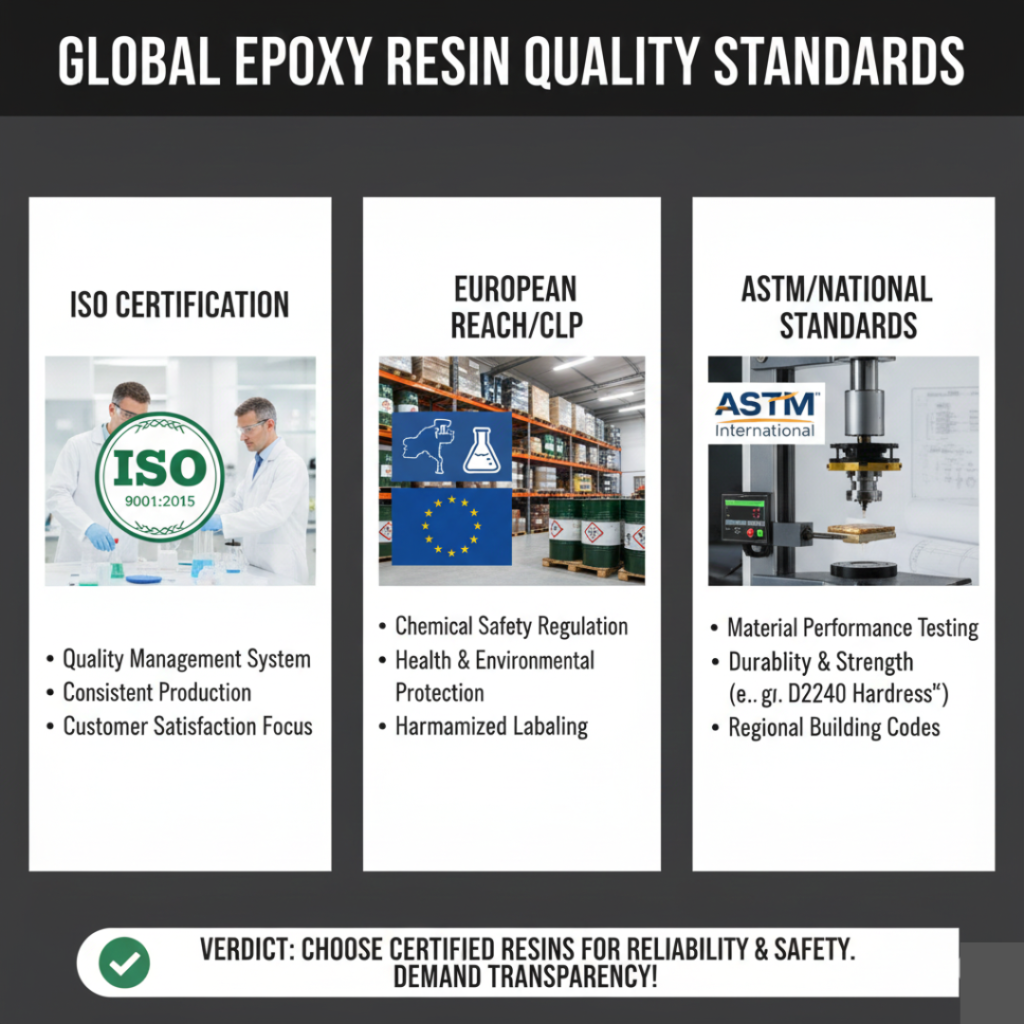
Epoxy resin quality standards are a set of manufacturing controls, testing procedures, and documentation practices that ensure the resin meets defined performance, safety, and consistency benchmarks.
These standards help manufacturers maintain:
- Uniform batch quality
- Predictable curing behavior
- Mechanical and chemical resistance
- Safe handling and application
Following epoxy resin quality standards ensures that the final product performs as expected across different applications and environments.
Importance of Quality Control in Epoxy Resin Manufacturing
Quality control is not a single step—it is a continuous process embedded throughout production.
Without proper controls, epoxy resin may suffer from:
- Inconsistent viscosity
- Poor adhesion
- Improper curing
- Reduced lifespan
Manufacturers that prioritize epoxy resin quality standards minimize these risks and deliver products suitable for industrial and commercial use.
Raw Material Inspection & Verification
Quality control begins before production starts.
Key Checks Include:
- Verification of raw material purity
- Consistency in chemical composition
- Compatibility with resin formulation
High-quality epoxy resin cannot be produced using inconsistent or contaminated raw materials. Strict inspection ensures a stable foundation for manufacturing.
Controlled Manufacturing Environment
Maintaining a controlled environment is essential to meeting epoxy resin quality standards.
Manufacturers closely monitor:
- Temperature
- Pressure
- Mixing ratios
- Reaction time
These controls ensure that the chemical reactions forming the epoxy resin occur correctly and consistently across every batch.
Batch Testing & In-Process Monitoring
During production, epoxy resin undergoes multiple in-process checks.
Common Monitoring Parameters:
- Viscosity levels
- Gel time
- Heat generation during reaction
These checkpoints allow manufacturers to identify deviations early and make adjustments before the batch is finalized.
Physical & Performance Testing
Once the resin is produced, it is subjected to physical and performance tests to confirm compliance with epoxy resin quality standards.
Typical Tests Include:
- Adhesion strength
- Hardness after curing
- Chemical resistance
- Thermal stability
These tests ensure the resin will perform reliably in real-world applications such as flooring, coatings, or structural bonding.
Curing Behavior Evaluation
Curing behavior is one of the most critical aspects of epoxy resin performance.
Manufacturers evaluate:
- Curing time
- Final hardness
- Surface finish
Consistent curing ensures ease of application and long-term durability, especially in industrial and construction environments.
Documentation & Batch Traceability
Reputable manufacturers maintain detailed records for every batch produced.
Documentation typically includes:
- Batch numbers
- Production parameters
- Test results
This traceability allows manufacturers to track quality, resolve issues quickly, and maintain compliance with epoxy resin quality standards.
Packaging & Storage Quality Checks
Quality control continues even after production is complete.
Before dispatch, manufacturers ensure:
- Proper container sealing
- Correct labeling
- Safe storage conditions
Incorrect packaging or storage can compromise resin quality, even if manufacturing standards are met.
Why Quality Standards Matter to Buyers
For end users, epoxy resin quality standards translate into:
- Reliable performance
- Reduced application failures
- Longer service life
- Better return on investment
Buyers who source from manufacturers that follow strict quality standards experience fewer issues during application and maintenance.
Continuous Improvement in Quality Control
Leading manufacturers continuously review and improve their quality control systems.
This includes:
- Updating testing methods
- Improving formulations
- Training technical staff
Such practices ensure epoxy resin products evolve with industry requirements and customer expectations.
Final Thoughts
Quality control standards are the backbone of epoxy resin manufacturing. From raw material inspection to final packaging, every step contributes to product reliability and performance. Manufacturers that follow strict epoxy resin quality standards deliver consistent, durable, and application-ready products that meet industrial demands.
For contractors, builders, and industrial users, understanding these standards helps in choosing the right supplier and ensuring long-term project success.
FAQ’S
Epoxy resin quality standards are manufacturing and testing guidelines that ensure consistent performance, proper curing, chemical resistance, and long-term durability of epoxy resin products.
Quality control prevents issues such as improper curing, weak adhesion, and inconsistent viscosity. It ensures that every batch meets required performance levels for industrial, construction, and commercial applications.
Manufacturers test epoxy resin through viscosity checks, curing time evaluation, adhesion strength testing, chemical resistance analysis, and thermal stability assessments to ensure reliable performance.
Following strict quality standards results in reliable application, fewer failures, longer service life, reduced maintenance costs, and better overall value for users.