

Epoxy resin is a high-performance material widely used in industrial flooring, construction, coatings, electronics, and structural bonding. While many people use epoxy products daily, few understand what happens behind the scenes. This guide explains the epoxy resin manufacturing process in a clear, step-by-step manner, from raw materials to final packaging.
Understanding this process helps buyers, contractors, and businesses make informed decisions when sourcing epoxy resin.
What Is Epoxy Resin?

Epoxy resin is a thermosetting polymer that hardens through a chemical reaction when mixed with a curing agent. Once cured, it forms a rigid, durable, and chemically resistant material suitable for demanding applications.
The epoxy resin manufacturing process focuses on precision, consistency, and strict quality control to ensure reliable performance.
Step 1: Selection of Raw Materials
The manufacturing process begins with carefully selected raw materials. The quality of these inputs directly affects the strength, clarity, and durability of the final resin.
Common Raw Materials Include:
- Epoxy base compounds
- Reactive diluents
- Additives for flexibility or strength
- Stabilizers for long-term performance
Manufacturers source raw materials that meet strict industrial standards to ensure consistent resin properties.
Step 2: Chemical Reaction & Resin Formation
This is the core stage of the epoxy resin manufacturing process.
In controlled reactors, epoxy base compounds undergo a chemical reaction under specific temperature and pressure conditions. This reaction forms the epoxy resin structure that gives the material its bonding and mechanical strength.
Precision is critical at this stage—small variations can impact curing time and performance.
Step 3: Viscosity & Property Adjustment
Once the base resin is formed, manufacturers adjust its properties to suit different applications.
Adjustments May Include:
- Controlling viscosity for easy application
- Enhancing flexibility or hardness
- Improving chemical or heat resistance
This step ensures the resin can be used for flooring, coatings, electrical insulation, or industrial bonding.
Step 4: Filtration & Impurity Removal
After formulation, the resin is filtered to remove impurities and air bubbles. This step improves clarity, strength, and uniformity.
Clean filtration is essential in producing epoxy resin suitable for industrial and commercial use.
Step 5: Quality Testing & Inspection
Before approval, each batch goes through quality testing.
Common Tests Include:
- Viscosity testing
- Curing time evaluation
- Adhesion strength checks
- Chemical resistance assessment
Quality control ensures every batch meets performance standards and remains consistent across production cycles.
Step 6: Blending With Curing Systems (If Required)
Some epoxy resins are supplied as part of a two-component system. In such cases, manufacturers prepare compatible curing agents separately to ensure proper reaction during application.
This step is critical for maintaining predictable curing behavior and long-term durability.
Step 7: Packaging & Labeling
Once testing is complete, the resin is packaged into appropriate containers based on customer requirements.
Packaging Options Include:
- Small packs for retail use
- Medium containers for contractors
- Bulk drums for industrial supply
Proper labeling includes batch numbers, safety instructions, and application guidelines.
Step 8: Storage & Distribution
Finished epoxy resin is stored under controlled conditions to preserve shelf life. Manufacturers then distribute the product to suppliers, contractors, and industrial clients.
Efficient storage and logistics ensure the resin reaches users in optimal condition.
Why the Manufacturing Process Matters
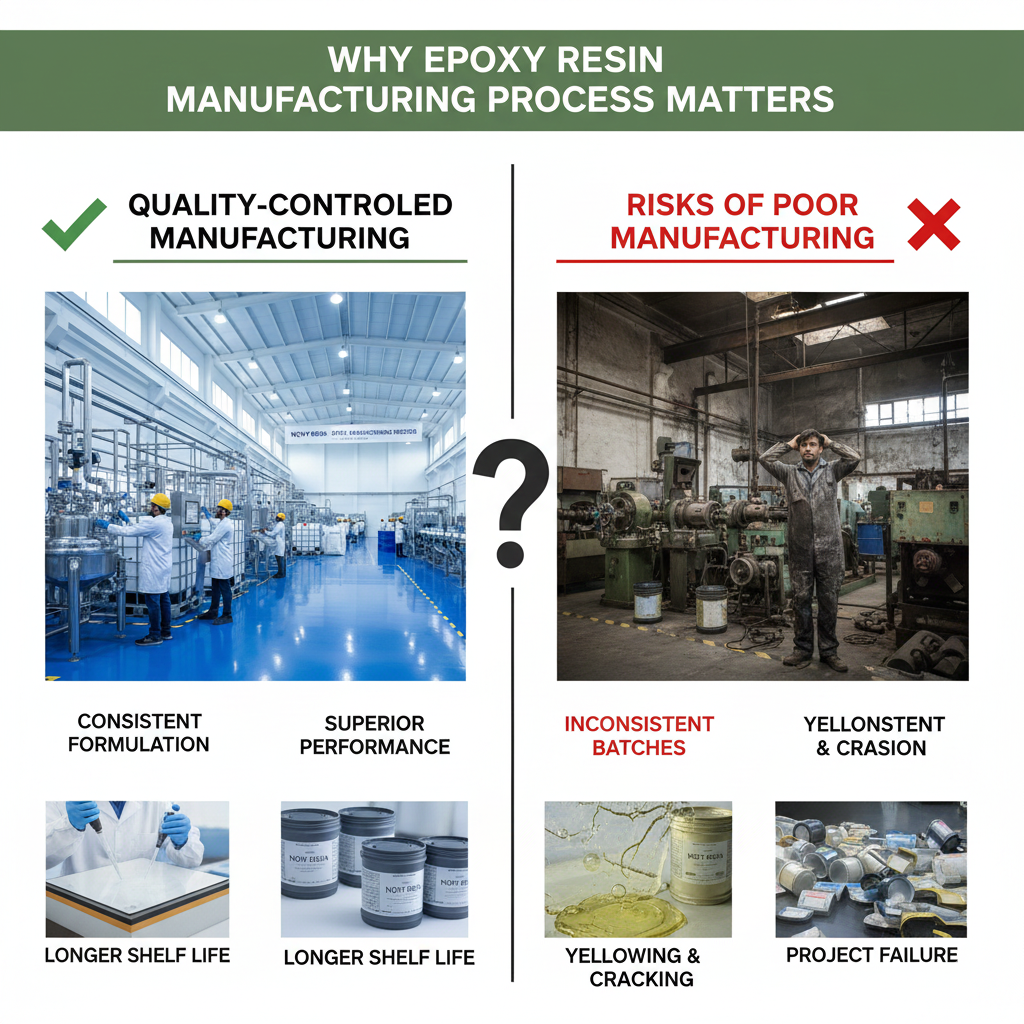
A well-controlled epoxy resin manufacturing process ensures:
- Consistent quality
- Reliable curing performance
- Long service life
- Safe application
Buyers who understand this process can better evaluate product quality and supplier reliability.
Final Thoughts
Epoxy resin manufacturing is a precise and highly controlled process that combines chemistry, engineering, and quality management. From raw material selection to final packaging, every step plays a role in producing a durable and high-performance product.
Understanding how epoxy resin is manufactured helps users choose better products and ensures confidence in long-term applications.
FAQ’S
The epoxy resin manufacturing process involves selecting high-quality raw materials, chemical reactions to form the resin, viscosity adjustments, filtration, quality testing, blending with curing agents if needed, and finally packaging and distribution.
Quality control ensures consistent performance, proper curing, chemical resistance, and long-term durability. Each batch is tested for viscosity, adhesion strength, and curing time to meet industrial standards.
Yes, manufacturers can adjust viscosity, hardness, flexibility, and chemical resistance to create epoxy resin suitable for specific applications such as flooring, coatings, electrical insulation, or industrial bonding.
Epoxy resin is packaged in small packs, medium containers, or bulk drums depending on customer needs. It is stored under controlled conditions to preserve shelf life and maintain quality until distribution.